Orthodontics for Children
Deborah Ryan - January 2025
 The purpose of orthodontic treatment is to make the best of our teeth. Orthodontics is used to improve the appearance and alignment of twisted, protruding or crowded teeth, to correct problems with the way the teeth bite together and to help with an open-bite which will prevent mouth breathing, as that can adversely affect the gum health. In some cases, abnormal positioning of teeth can affect the jaw position which may have an effect on the jaw joint (the TMJ), this would be likely referred to a maxillofacial specialist who would plan for such complex needs in children.
It is thought half of children in the UK would benefit from some form of tooth movement to improve the general health and appearance of the mouth. When teeth are straight it is easier to look after long term as food and bacteria cannot be retained in difficult to access areas, this should mean less cavities and better gum health in older age.
For children orthodontic treatment in the UK is usually started after the baby teeth have all been naturally lost, but while the jaw is still developing, this is about 12 years old. Conversely in America early orthodontic intervention by the age seven is part of the American Association of Orthodontists (AAO) aim. Orthodontic treatment for adults can begin at any age.
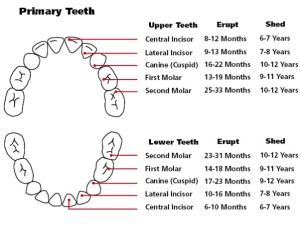
Children’s adult tooth eruption varies enormously and sometimes a baby tooth is not lost because there is no adult successor, this is called hypodontia. This is one of many reasons why a child should be brought to a dentist regularly.
 If orthodontics is being considered it should be made clear that treatment will not begin unless there is a very good standard of oral hygiene, as orthodontic treatment can increase the risk of tooth decay and gum problems. Children that age are usually not the best at maintaining perfect oral hygiene and the addition of fiddly brackets will make it much harder. A good dentist, therapist or hygienist will show ways to keep all areas clear from acid producing plaque using TePe brushes and very small toothbrushes, in addition to the normal aids.
If plaque is not efficiently removed acid is produced from the bacteria and two years later, on removal of the orthodontic brackets, there will be an ‘etched’ demarcation which is permanent. Oral hygiene checks throughout treatment is imperative. It is common to be given toothpaste with a higher level of fluoride, or a mouthwash that contains fluoride, to reduce the risk of tooth decay and acid damage and there should be advice to avoid sugary foods and fizzy drinks. It is imperative to continue to see a regular dentist while having orthodontic treatment because they will look after the general oral health and check the plaque control.
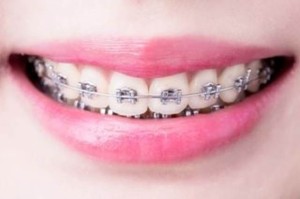
Orthodontics for children requires careful assessment and planning, then the fitting to the teeth of traintracks. These are small brackets adhered to the tooth surface using composite (white filling material). A wire is then passed through which is fixed with elastic bands, usually the adult first molars are used as major anchorage and have a circular band fitted. Once fitted they can sometimes rub the cheeks and make a sore place but the patient is given wax to stick over the offending bracket.
In some cases, there may be the need to wear external headgear, or have small screws placed temporarily to move down teeth under the gum, and also to have some teeth removed as part of the treatment. And trips to the orthodontic clinic are frequent throughout treatment for adjustments. All of this requires careful consideration.
The length of treatment will depend on how complicated the issue is, but it’s usually between 6 and 30 months. Ask to be given an estimate of time before starting treatment.
In most cases the family dentist will refer to an orthodontist, although you may sometimes be able to get treatment directly from your dentist, however do ask about credentials as it’s a grey area and some dentists may have done a short course rather than trained to specialise. You can only be called an ‘Orthodontist’ with extensive post dentistry training to be admitted to the General Dental Council’s list of specialists. By law, only registered specialists can call themselves a specialist orthodontist. Some orthodontists work with orthodontic therapists who can adjust braces under the orthodontist’s supervision.
When treatment finishes, a thin retaining wire may be fitted behind the front teeth to secure the new position, and/or a removable hard plastic device - a retainer - which needs to be worn every night, non-compliance may lead to tooth drift.
Privately you can get less visible ceramic brackets for traintrack braces and there may be the option of removable clear retainers, the most common brand is Invisalign. Here composite tags are placed on the teeth and with the plastic aligners the tooth movement is achieved through a series of different aligners. These fit closely over the teeth and are taken out at mealtimes or to clean them, but are otherwise worn all the time. They require complete compliance, not wearing them will delay treatment. Invisalign First is an orthodontic treatment specifically for children aged 6-12, and is only available privately.
This choice will depend on how complex the case is, tooth movement cannot always be achieved like this, train tracks may be the only way.
 NHS orthodontic treatment is free for those under 18 with a clear health need for treatment. But because of high demand there can be a long wait list. The NHS main function is to support good health, it is here to ensure patients health at the lowest cost – so that they can help as many people as possible with the limited funding the government provides. Invisalign clear aligners are expensive and it would mean significantly fewer people could be helped each year. For this reason, the NHS won’t provide them or any other premium products. Only traditional metal traintrack braces are approved as these are more cost-effective and will do the job well.
A rating system called the Index of Orthodontic Treatment Need (IOTN) is used to assess eligibility for NHS treatment. This is available for Grade 4 and Grade 5 cases. Grade 3 cases are judged on an individual basis. Sometimes NHS treatment may be offered if the appearance of teeth, jaw or face is of concern.
Orthodontic treatment is not usually available on the NHS for adults. Most adults have private treatment.
- Grade 1 - near perfection
- Grade 2 - minor imperfections, such as slightly irregular teeth, or slightly protruding teeth.
- Grade 3 - for greater imperfections which would not normally require treatment for health reasons.
- Grade 4 - for more severe imperfections, which need to be addressed for health reasons, including issues with the bite that impact functionality.
- Grade 5 - for the most severe dental problems, including issues with crowding
NHS wait time for orthodontics have always been long, but COVID made the situation worse. Appointments were postponed which created a backlog and when treatment resumed the dental world had to undertake significantly more cleaning protocols meaning not as many patients could be seen daily. Finally, as we are all aware there are less dentists offering NHS treatment, although the new government are aware of the problems with the current contacts offered to dentists. All of this has combined to create long waiting lists.
Private orthodontic treatment is widely available, but expensive. The fees can range from £2,000 to £15,000, depending on the complexity of the treatment and the type of appliances used. In this case it would be very important to get an accurate quote for treatment planning, but often interest free or low fee finance options are offered.
Useful links:
www.justonenorfolk.nhs.uk – really good webpage with lots of children’s health information including teeth
You can to check an orthodontist’s qualifications at the GDC - gdc-uk.org – Search Register
www.nhs.uk – for general dental health information
www.colgate.com – look for children’s dental health
More about Deborah
Deborah Ryan is a Dental Therapist (a clinician who undertakes treatments on children including, extractions, fillings, crowns and fluoride applications) working in the paediatric department at the Royal London Hospital and privately as a Dental Hygienist in Plowman & Partners in Queen Anne Street W1. She is also a TMJ Massage Therapist (a therapist who manipulates the musculature affecting the jaw joint) at Moon – Three Age Women’s Health in Chetwynd Road. Deborah has three children, one who has hypodontia and one who had NHS orthodontic treatment.
Book with us
If you would like to book a treatment, class, event or workshop follow this link.
Get our newsletter
Instagram @moon_womens_health